Booker T. Washington National Monument is a commemoration of the birthplace of America’s most prominent African American educator and orator of the late nineteenth and early twentieth centuries. The property evokes an 1850’s middle class tobacco farm, representative of Booker T. Washington’s enslaved childhood at the Burroughs farm. He was born in 1856 to the Burroughs’ cook, Jane, and lived on the farm throughout the Civil War. After the Emancipation Proclamation was read on the farm, he moved with his family to work in the salt furnaces and coal mines of West Virginia. He rose from the bondage of slavery in Franklin County, Virginia to become an advisor to two United States presidents. Washington was the founder and the first principal of Tuskegee Normal and Industrial Institute in Alabama in 1881.
Booker T. Washington
(April 5, 1856 - November 14, 1915)
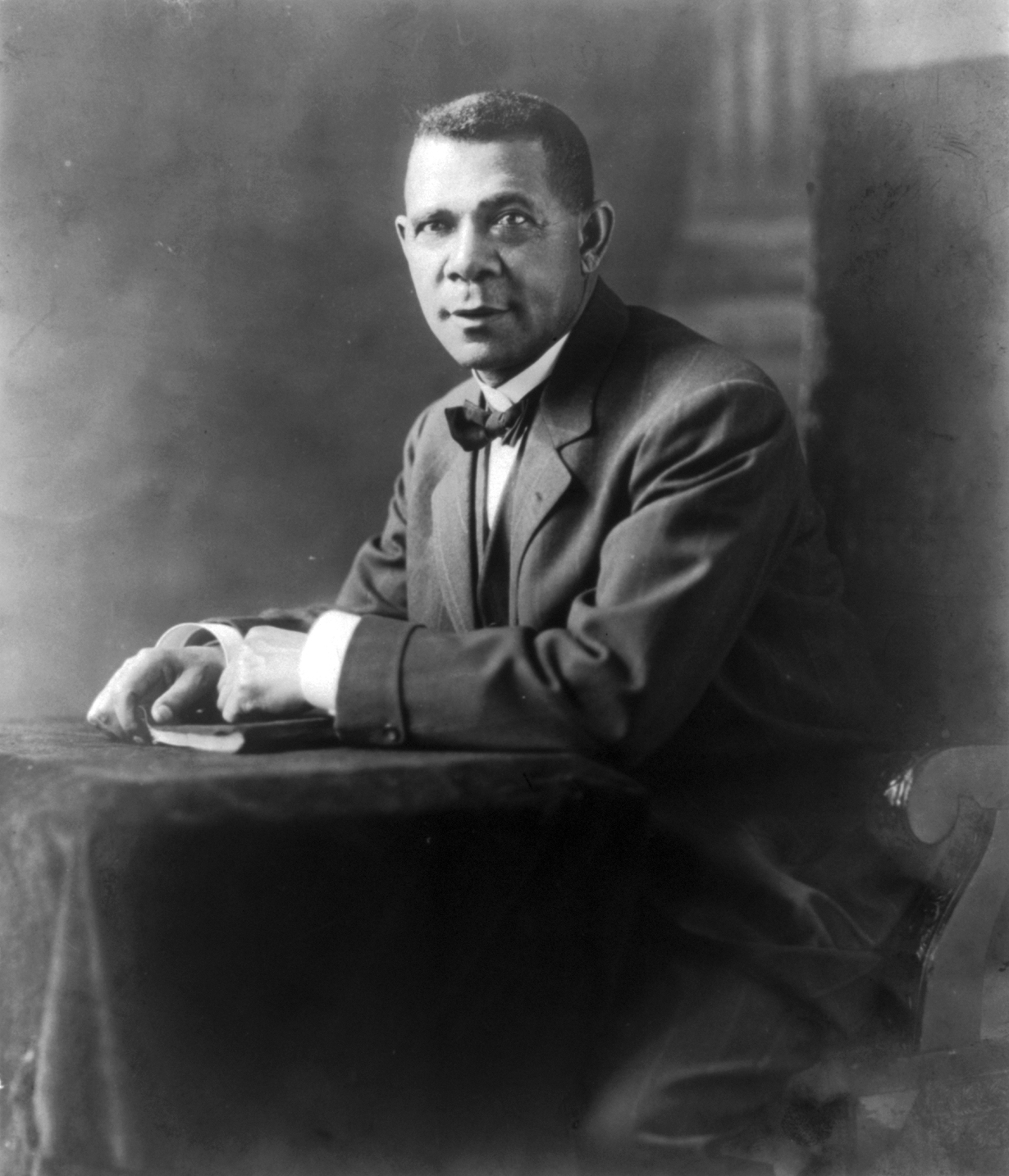
ADVISOR • EDUCATOR • FOUNDER • LEADER • HUMANITARIAN • ORATOR
BOOKER T. WASHINGTON TIMELINE
April 5, 1856
Booker T. Washington is born a slave on the Burroughs’ Plantation.
April 1861
The Civil War begins and Washington’s name appears on Burroughs’ property inventory. Booker's value is $400.00.
1865
The Civil War ends and Washington becomes one of the four million slaves to be emancipated. During the fall, Washington sets out for Malden, WV with his mother (Jane), and two siblings (brother, John and sister, Amanda) to start a new life with stepfather, Washington Ferguson.
1865-1871
Washington works in the salt furnaces and coal mines in Malden while attending school, for the first time, in the evenings. works in Ruffner home and learns to read with Mrs. Viola Ruffner and by attending William Davis' School in afternoons.
1872
Washington leaves his home to attend the Hampton Institute.
1875
Washington graduates from the Hampton Institute with honors.
1875-1877
Washington teaches school, in his hometown of Malden, WV, while helping his brothers (John, and adopted brother James) pay their tuition for the Hampton Institute.
1878
Washington spends 18 months studying in Washington D.C. at the Wayland Seminary School.
1879-1881
Washington teaches at the Hampton Institute, while being dorm father to 50 Native American students.
May 1881
When asked for a teacher to head a school in Tuskegee, Alabama, General Armstrong recommends Washington for the job.
July 4, 1881
At age 25, Washington opens the Tuskegee Institute in an old church.
1882
The first building of the Tuskegee Institute is built by the students with bricks they made themselves.
1882
Washington marries his hometown sweetheart, from Malden, WV, Fannie Norton Smith.
1883
Fannie Washington gives birth to Washington’s first child, Portia Washington.
1884
Fannie Washington dies, possibly from injuries suffered in a fall from a wagon.
1885
Washington marries his colleague, a teacher and Lady Principal at The Tuskegee Institute, Olivia America Davidson.
1887
Olivia Washington gives birth to Washington’s first son, Booker T. Washington Jr.
May 9, 1889
Olivia Washington dies from injuries she suffered during a fire that broke out in the Washington home.
1893
Washington marries Margaret James Murray who had been Lady Principal of Tuskegee Institute for two years.
September 1895
Washington delivers The Atlanta Address at the Cotton States and International Exposition, urging citizens of both races to work together toward social peace.
June 24, 1896
Washington is presented with an honorary degree from Harvard University.
1899
‘The Oaks,’ Washington’s Tuskegee residence, is built by the school’s students and faculty with materials produced on campus.
1900
The Story of My Life and Work, Washington’s first autobiography, is published.
1900
Washington founds the National Negro Business League an idea appropriated by W.E.B. Du Bois.
March 1901
Washington’s most successful autobiography, Up from Slavery, is published.
July 16, 1901
Controversy arises after Washington dines at the White House while consulting President Theodore Roosevelt about political appointments in the South.
March 1915
Washington sponsors National Negro Health Week, which was designed to bring money and energies to bear on issues of sanitation, hygiene, and disease prevention among the poor.
November 14, 1915
Washington dies at home in Tuskegee, Alabama.
Did You Know?
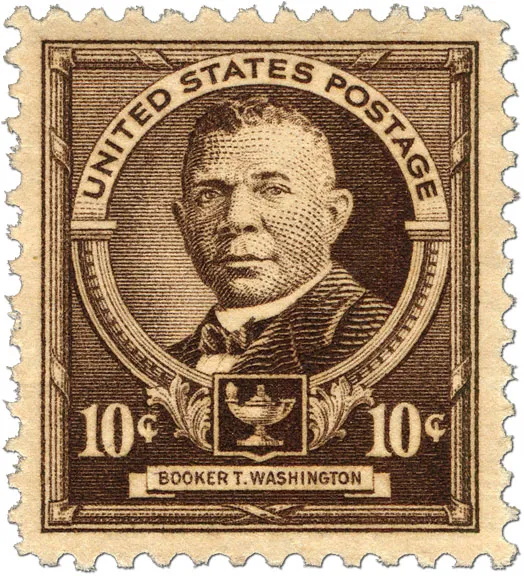
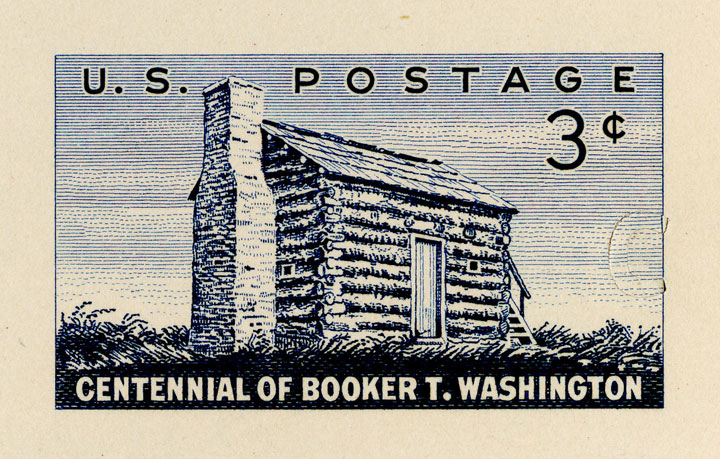
Booker T. Washington is the first African American figure to be honored with a stamp. On April 7, 1940, as part of the Famous Americans Series, the Post Office released the the 10¢ stamp at Tuskegee Institute. On April 5, 1956, a second stamp was released, a 3¢ stamp, depicting Booker's birthplace in Franklin County, Virginia.